


State of the art
Most of Pessoa’s dramatic works in English remain unpublished, and little has been written about them. Apart from a few lines from Prometheus Revinctus (published by Mendes in 2018), only Marino was edited by Pittella in 2020/21.
The earliest record of The Duke of Parma, one of the many incomplete and fragmentary works listed by Pessoa, dates to 1966, when Georg Rudolf Lind wrote about his findings in Fernando Pessoa’s estate, mentioning this tragedy and another of Pessoa’s English dramas, Prometheus Rebound, for the first time. In the late 1970s, Teresa Rita Lopes (1977) and Anne Terlinden (1978) drew attention to the fact that these works had not been published.
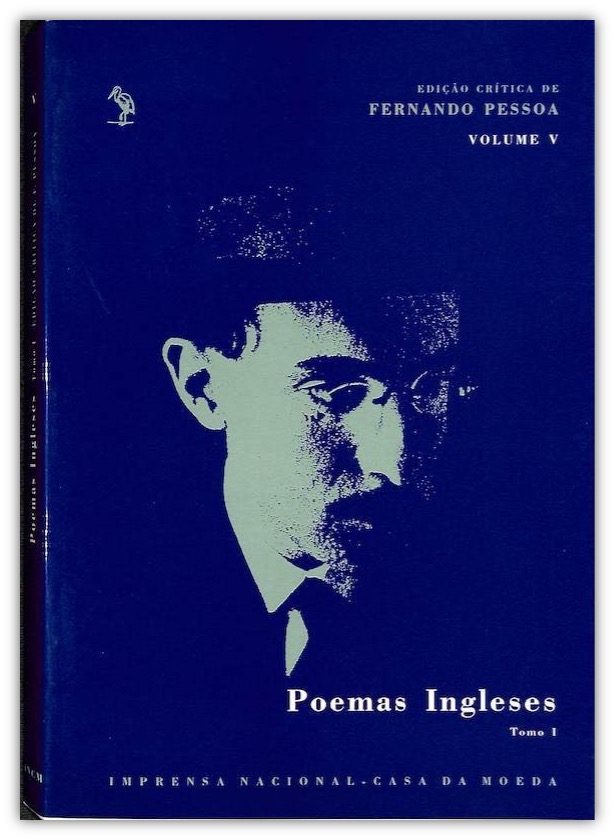
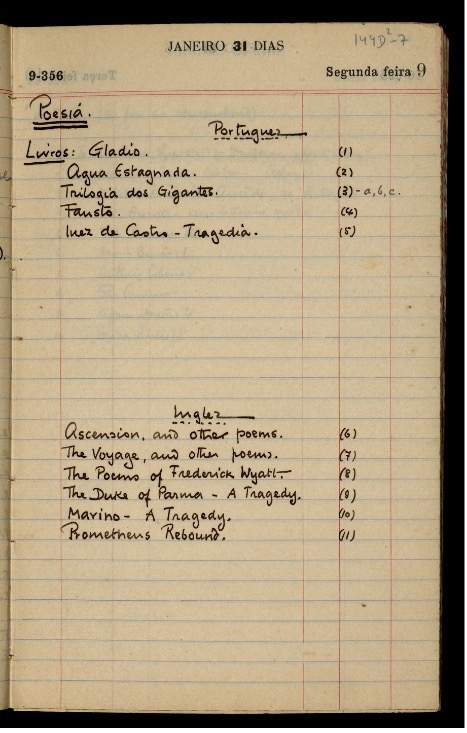
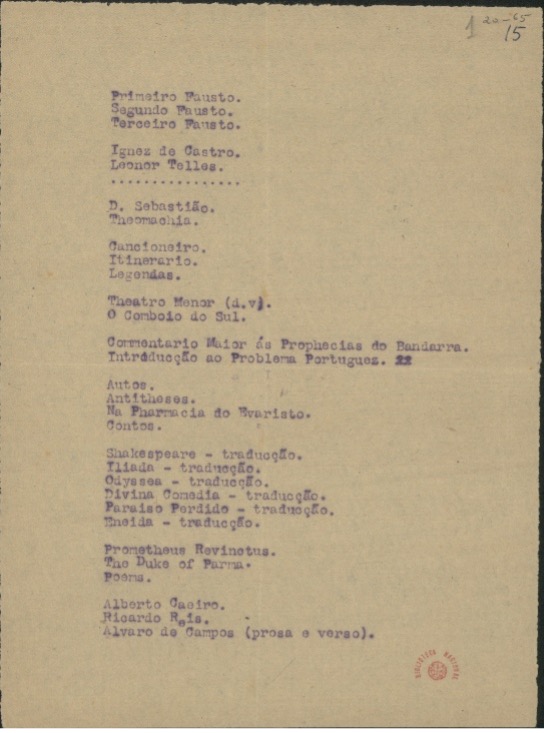
In 1993, João Dionísio introduced his edition of Fernando Pessoa's English Poems by referring to a collection of lists in which the poet considered various arrangements for his English works, including Prometheus Rebound and The Duke of Parma. These documents are now available in the Digital Edition of Fernando Pessoa, with references to The Duke appearing in lists dating from 1913 to 1933.
 |
 |
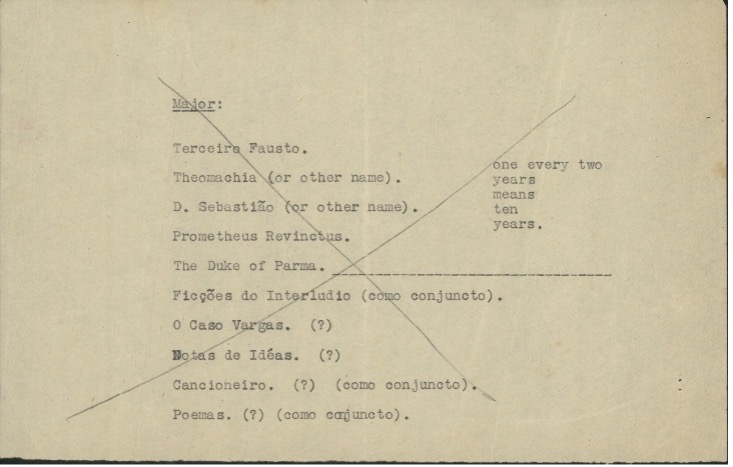 |
| List from 1913 | List from 1925 | List from 1933 |
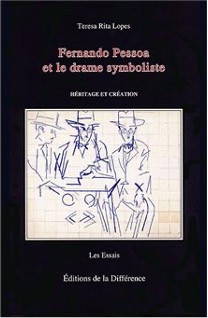 In 2004, Lopes presented a facsimile of a page from the drama, dated 4 August 1918 (in Fernando Pessoa et le Drame Symboliste: Héritage et Création) and in 2012 Patricio Ferrari transcribed a line in his doctoral thesis Meter and Rhythm in the Poetry of Fernando Pessoa. Regarding the metre, Carlos Pittella (2020) wrote in a paper about Pessoa’s dramatic works in English that Pessoa’s three English dramas appear to have been primarily written in his own version of iambic pentameter, combining traditional pentameter with features of decasyllabic Portuguese verse.
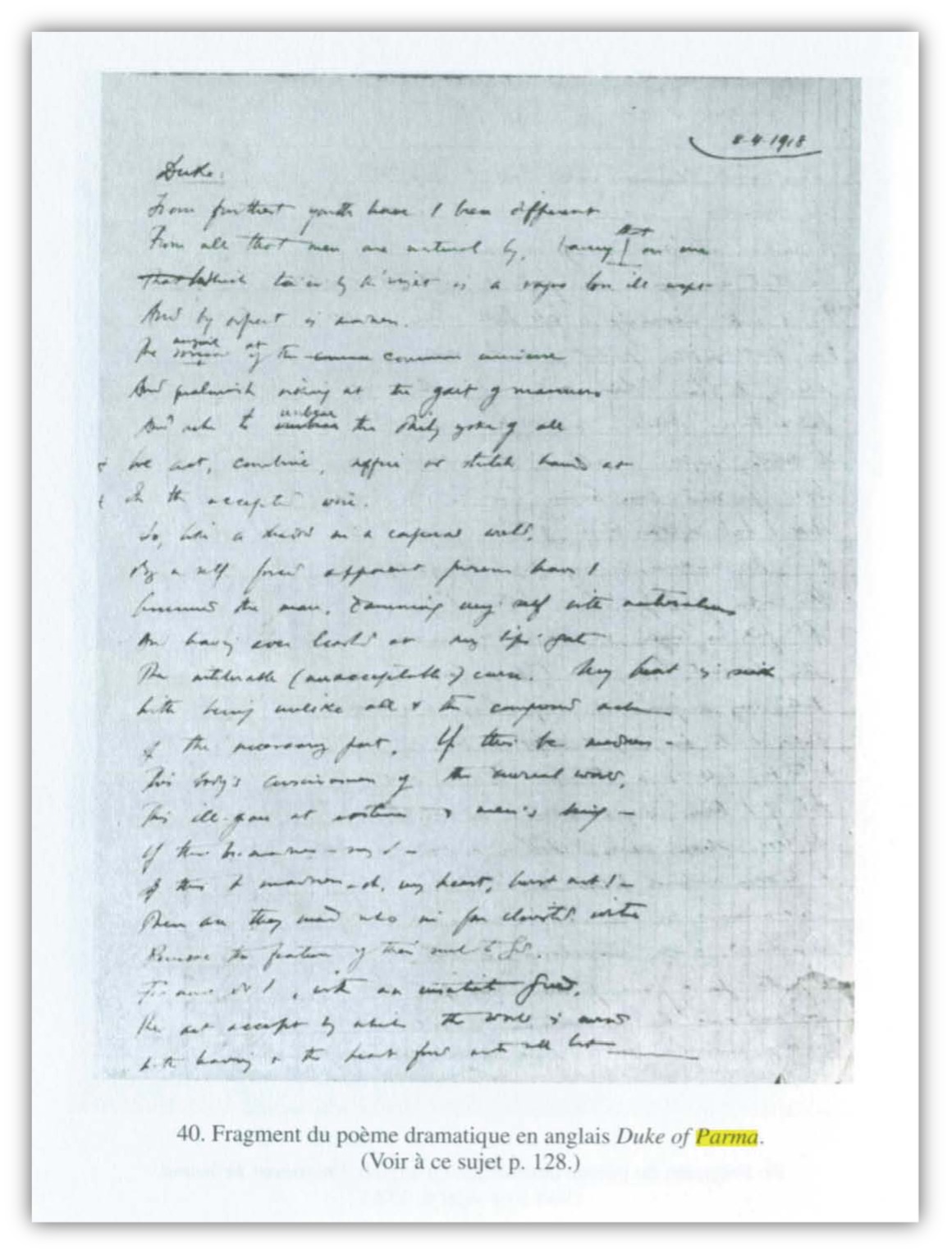 More recently, in 2021, Richard Zenith provided additional information on The Duke of Parma in his extensive biography of Fernando Pessoa. Despite the fragmentary and incoherent state of the play's evolution, as demonstrated by the manuscripts, Zenith was able to identify a storyline in which madness, sex and sexual abstinence were prominent themes. When reconstructing the Duke's character and his aversion to female sexuality, the American scholar quoted a dozen words and phrases from the play that he had transcribed for the first time. Zenith suggested that this tragedy could contribute interesting insights to the study of its author, even from a biographical perspective.
To date, 59% of the approximately 1,000 documents in Pessoa's estate concerning his dramatic works (in both Portuguese and English) have been published, mostly in digital editions in recent years. With the publication of The Duke of Parma, the percentage of published dramas will increase to around 75% (an increase of 16%), which signals the importance of this tragedy within Pessoa’s dramatic works.
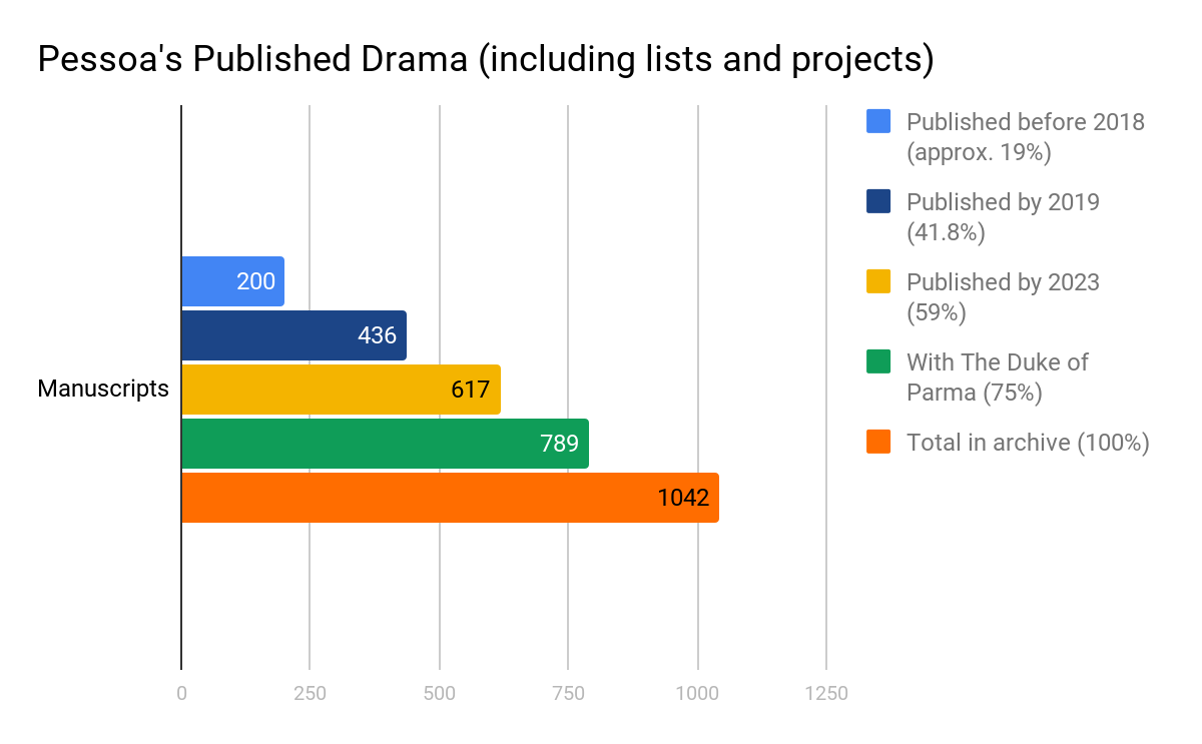
The unveiling of The Duke of Parma will have significant implications for the study of Pessoa and modernist literature, opening new critical perspectives in comparative literary studies.
From a textual scholarship and criticism standpoint, this research will develop an editorial model suitable for reconstructing plays written in a fragmentary and chaotic manner. This model will emphasise the nonlinear nature of the texts by presenting not only the text as established by critics, but also its other potential forms as evidenced by rejected or alternative variants. The research will also shed light on Pessoa's creative process, making a crucial contribution to the study of the genesis of his English writings and dramatic works.
The creation of a digital archive of The Duke of Parma will make all information on the play's dossier accessible for use in various studies.
