
Research Unit
Due to the multidisciplinary nature of this project, the research unit comprises several experts from different fields of research.
Coordinator
Professor Enrico Martines coordinates all the activities of the project. He will assist the editorial consultants in their tasks. He organised the publication of contributions on the preliminary aspects of the project. He is reviewing the whole of Pessoa’s archive, searching for other documents possibly related to the Duke. He will realise a study on the play and will edit the collective volume. He will organise an international conference at the end of the project.
Contact:  dukeofparma@unipr.it
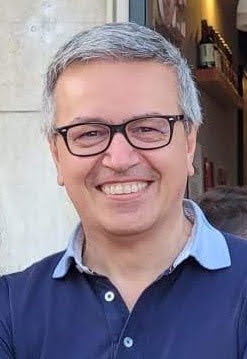
Prof. Enrico Martines
Università di Parma
Enrico Martines is Associate Professor of Portuguese and Brazilian Literature at the University of Parma in Italy. A part of the Estudos da edição crítica de Fernando Pessoa collection (INCM), he edited the correspondence between Fernando Pessoa and the directors of Presença (Cartas entre Fernando Pessoa e os directores da Presença, 1998) and studied the history of this magazine, as well as the relationship between the Orpheu movement and the so-called “second modernism”. He has worked on critical-genetic editions and philological studies of José Régio’s poetry as part of the research team studying and editing José Régio’s manuscripts. The results of this work include the publications José Régio, il poeta di Dio e del Diavolo (2003), José Régio: versos esparsos e inacabados (2016), and José Régio e os Mestres do Modernismo (2019). He has also published the book I modernismi in Portogallo e in Brasile (2019) as well as essays on modern Portuguese and Brazilian authors. In addition to being the coordinator of this research project, he is the scientific director of the project “The Unveiling of Fernando Pessoa's Literary Legacy: The Duke of Parma”, conceived by Dr Carlotta Defenu and to be carried out by her, having been awarded a Horizon-MSCA grant.
Grant Holders (GH)
A select group of scholars has been awarded a research grant to transcribe and digitally encode the documents.
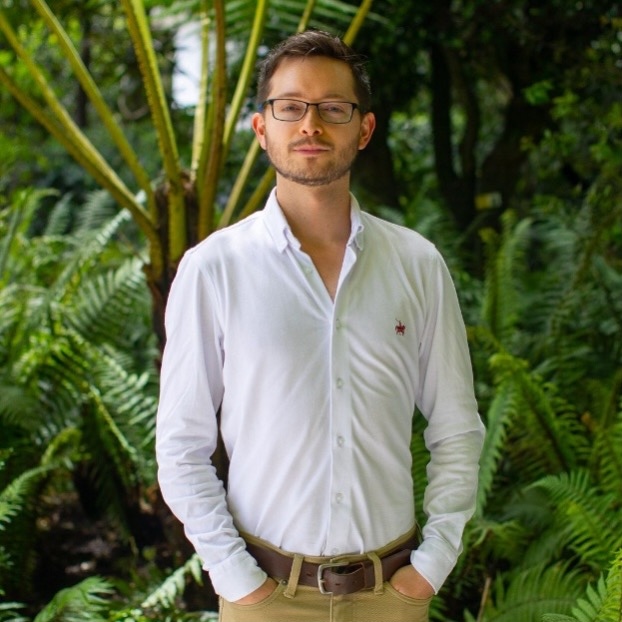
Dr. Nicolás Barbosa
Universidad de los Andes
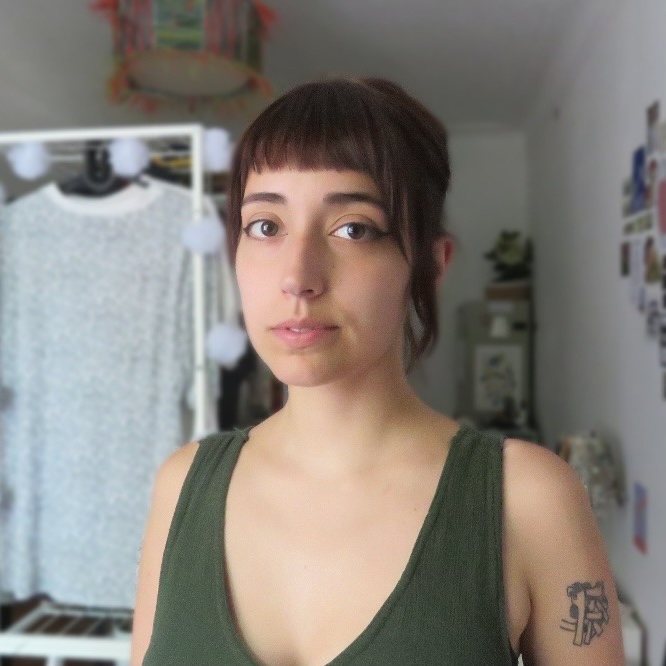
Nicolás Barbosa (GH1), who was contracted by the Universidad de los Andes, is responsible for transcribing the documents contained in folder 114D, under the supervision of Professor Jerónimo Pizarro.
He is a Visiting Professor of Portuguese Studies at Universidad de los Andes in Bogotá, under the Camões I.P. cooperation agreement in Colombia. He holds a Ph.D. and M.A. in Portuguese and Brazilian Studies from Brown University and a B.A. in Literature from Universidad de los Andes. He is responsible for the Spanish translation of thirty Lusophone and Anglophone literary works in Ibero-America and the author of over twenty academic articles and book chapters. Barbosa has also worked as a cultural advisor to the embassies of the U.S., Sweden, Norway, Denmark, Finland, and the Netherlands in Colombia.
Dr. Maria João Sousa
Universidade de Lisboa
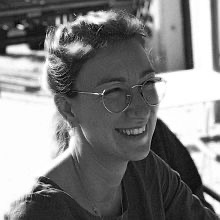
Maria João Sousa (GH2), who was contracted by the Universidade de Lisboa, is responsible for transcribing the documents contained in folder 115D, under the supervision of Professor João Dionísio.
She has a degree in Portuguese Studies and is currently studying for a master's degree in Textual Criticism at the University of Lisbon's Faculty of Letters. She took a complementary course in Text Revision at this faculty, deepening her knowledge of Genetic Editing and Digital Humanities with the “Digital Humanities – Computer-assisted Genetic Editing: From Mediaeval Manuscripts to Born-Digital Documents” course at the University of Antwerp. She is currently a Portuguese teacher for secondary education students who are non-native speakers of the language.
Dr. Elena Lombardo
Università di Parma
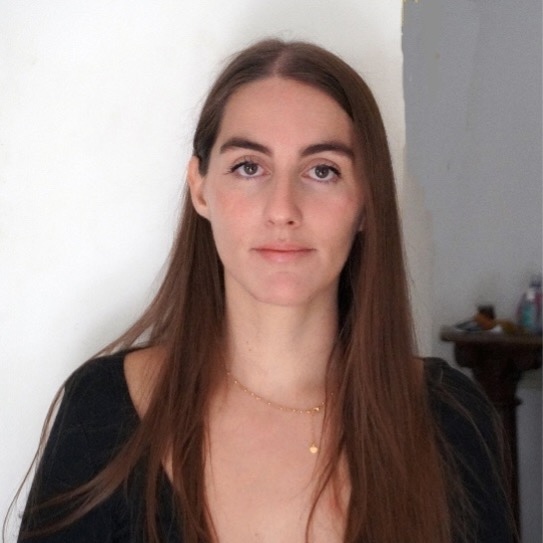
Elena Lombardo (GH3), who was contracted by the Università di Parma, is responsible for the digital encoding of the documents and their uploading into the digital archive.
PhD in Textual Criticism from the University of Lisbon, Portugal (2025). She is a collaborator at the Centre of Linguistics of the University of Lisbon, where she coordinates the projects Sebástica manuscrita and Do pergaminho ao computador: editar manuscritos na era digital. Her work focuses on digital scholarly editing, mainly of Portuguese historiographical texts (15th–18th centuries), and she is active in the fields of Textual Criticism, Digital Humanities and Historical Linguistics.
Dr. Carlotta Defenu
Università di Parma
Carlotta Defenu (GH4) was awarded a Horizon-MSCA grant in 2025 to carry out her research project, “The Unveiling of Fernando Pessoa's Literary Legacy: The Duke of Parma”, at the University of Parma, under the supervision of Prof. Enrico Martines. The project involves studying the authorial variants traceable in the creative process behind the tragedy. Dr Defenu is also part of the research unit, where she will assist with revising and encoding manuscript transcriptions digitally, as well as helping to organise the final conference in February 2026.
She holds a master's degree in Linguistic, Literary and Translation Studies from Sapienza University of Rome, and a PhD in Textual Criticism from the University of Lisbon. Her doctoral thesis examined the genesis and revision process of Fernando Pessoa’s orthonymous poems. She has published various articles and book chapters on textual criticism, genetic criticism, and genetic translation studies.
Editorial Consultants (ECs)
Professors João Dionísio, Simone Celani and Jerónimo Pizarro form a team of consultants with strong philological expertise and solid experience in editing the works of Fernando Pessoa. The ECs have determined the transcription criteria for the documents and are assisting the GHs with the most challenging aspects of this task. They will also establish the structure and organisation of a potential edition and conduct in-depth research into the tragedy's genetic evolution. Professor Jerónimo Pizarro is also researching into Fernando Pessoa’s private library, as it will be important to know which readings may have inspired the conception and the composition of this tragedy. Any marginalia found in Pessoa’s books would be highly valuable, shedding light not only on the British sources of the tragedy but also in relation to its setting.
Prof. João Dionísio
Universidade de Lisboa
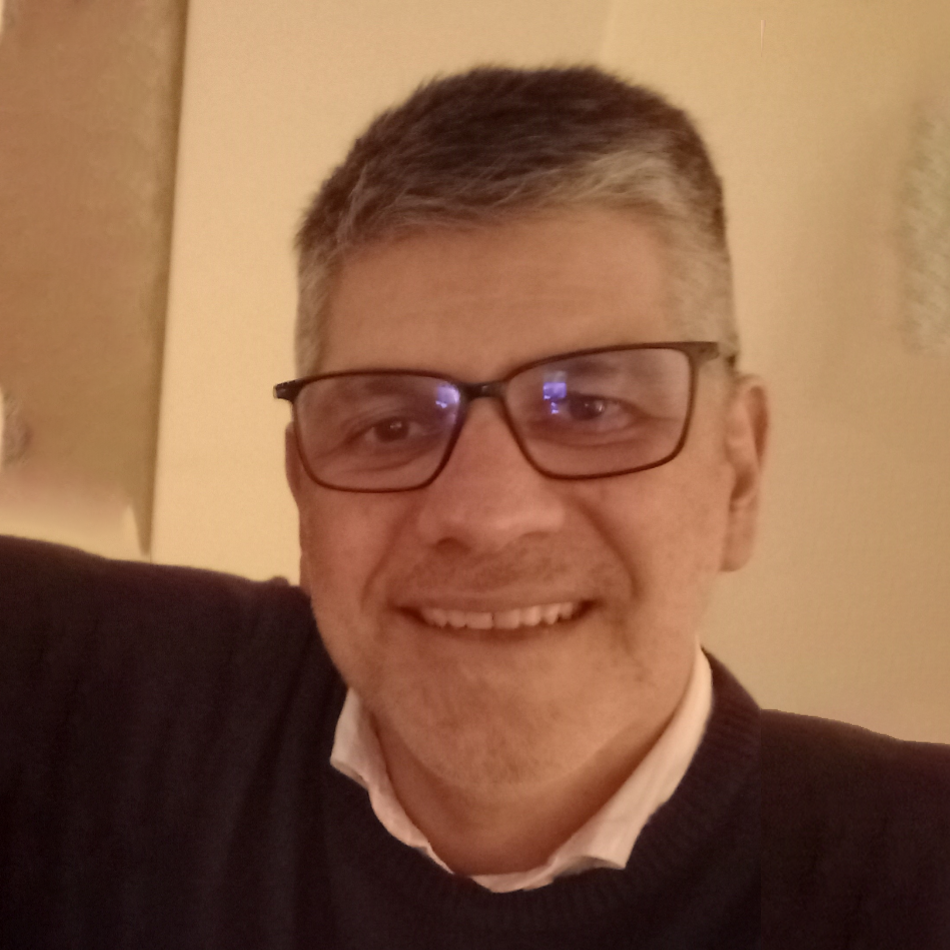
João Dionísio teaches at the School of Arts and Humanities (University of Lisbon), where he directed the Programme in Textual Criticism between 2010 and 2013. He also coordinated the Philology group at the Centre of Linguistics (CLUL) of the same university between 2019 and 2024. His current interests are focused on the interaction between textual materiality and hermeneutics. His most recent publications are the edition of Eduardo Lourenço's O Labirinto da Saudade (Lisbon: Fundação Calouste Gulbenkian, 2023) and of Almeida Garrett's Frei Luís de Sousa (Lisbon: Imprensa Nacional, 2022). He was the president of the European Society for Textual Scholarship in 2013-2016.
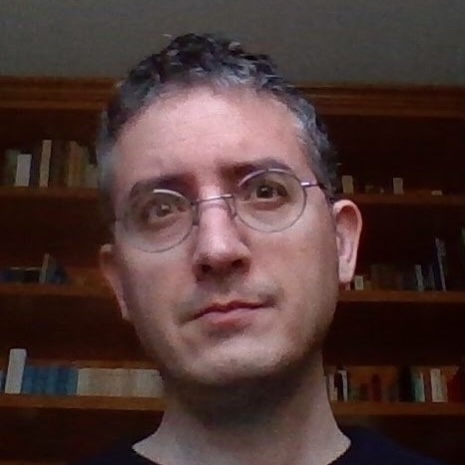
Prof. Simone Celani
Sapienza Università di Roma
Simone Celani is Full Professor of Portuguese and Brazilian Language and Translation at the University of Rome La Sapienza and coordinator of the "António Vieira" Chair (Instituto Camões/Portugal). His main areas of research are related to linguistic historiography, translation, literary linguistics, philology of contemporary works (in particular Fernando Pessoa), Lusophone Africa. He has more than a hundred publications to his credit; including L'Africa di lingua portoghese: storia, cultura, letteratura (Sette Città, 2003), Alle origini della grammaticografia portoghese (Nuova Cultura, 2012), Riscritture d'autore. La creazione letteraria nelle varianti macro-testuali (Sapienza Università Editrice, 2016), O espólio Pessoa (Imprensa Nacional-Casa da Moeda, 2020) and, in collaboration, Lingue romanze in Africa (Sapienza Università Editrice, 2021) and Culture di lingua portoghese (Hoepli, 2023).
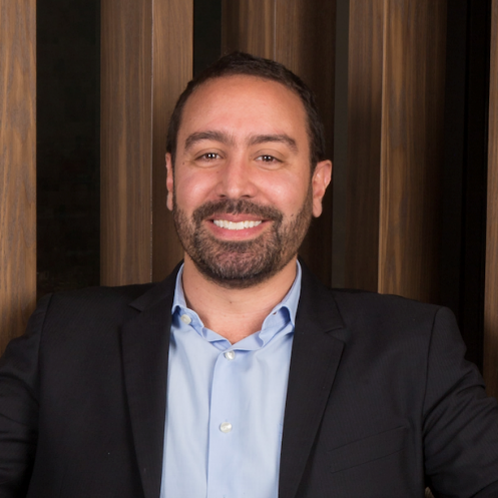
Prof. Jerónimo Pizarro
Universidad de los Andes
Jerónimo Pizarro is a Professor at Universidad de los Andes and holds the Camões Institute Chair in Portuguese Studies in Colombia. He holds two PhDs: one in Hispanic Literatures (Harvard University, 2008) and another in Portuguese Linguistics (University of Lisbon, 2006). Pizarro has contributed to seven volumes of the critical edition of Fernando Pessoa’s works published by INCM, including the first ever critical edition of the Livro do Desassossego (Book of Disquiet). Together with Steffen Dix, he co-edited Portuguese Modernisms in Literature and the Visual Arts (Legenda, 2011), as well as a special issue of Portuguese Studies (2008) and the essay collection A Arca de Pessoa (Pessoa’s Trunk, 2007). He served as Editor-in-Chief for two new Ática series: Fernando Pessoa | Works and Fernando Pessoa | Studies, to which he contributed over ten volumes. He currently curates the Pessoa Collection for the publisher Tinta-da-China. In 2020, he co-edited a special issue of The Translator with Paulo de Medeiros titled Fernando Pessoa and Translation. His most recent books include Ler Pessoa (Reading Pessoa, Tinta-da-China, 2018) and Fernando Pessoa: A Critical Introduction (Sussex Academic Press, 2020). In 2013, he directed the programme for Portugal’s participation in the Bogotá International Book Fair and received the Eduardo Lourenço Prize.
Digital Edition Consultant (DEC)
Professor Margherita Centenari, from the “Laboratorio di Informatica Umanistica e Cultura Digitale” (established within the Department of Humanities, Social Sciences and Cultural Industries), is supporting the PI and GH3 in defining the TEI schema. She could also help to encode the texts and upload them to the digital archive.
Prof. Margherita Centenari
Università di Parma
Margherita Centenari is currently a research fellow in Modern Italian Philology at the University of Parma (Italy). Her research interests include authorial philology, the history of manuscript and print, and the digital genetic editions of Giacomo Leopardi’s and Alessandro Manzoni’s literary works. Since 2018 she has worked with Giulia Raboni on the national project “Manzoni Online” (www.alessandromanzoni.org).
English Literature Consultant (ELC)
Given his expertise in the language, form and motives of the Shakespearean theatre, Professor Diego Saglia could support the fixation of the text. He will primarily research the probable sources of Pessoa’s English drama, playing a key role in identifying plays from the Romantic to the late Victorian eras of British drama and theatre that were influenced by (or that reworked) themes and settings from Renaissance drama.
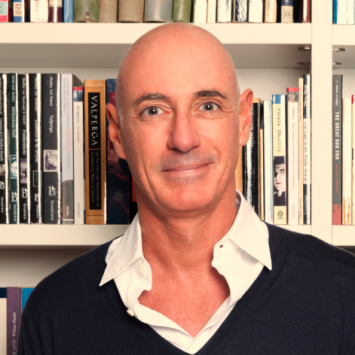
Prof. Diego Saglia
Università di Parma
Diego Saglia is Professor of English Literature at the University of Parma (Italy). His research focuses on Romantic literature and culture, also in connection to other European traditions. He is the author of several studies on Byron in Italian and English, including Byron and Spain: Itinerary in the Place of Writing (1996), Lord Byron e le maschere della scrittura (Roma: Carocci, 2009), and a number of essays published in international journals and chapters in edited collections. He is co-editor, with Michael Gamer, of A Cultural History of Tragedy in the Age of Empire (2020). His co-edited book Byron and Italy (with Alan Rawes, 2017) was awarded the Elma Dangerfield Award in 2018, and his translation of Byron’s Manfred into Italian appeared in 2019. His latest monographs are European Literatures in Britain, 1815–1832: Romantic Translations (2019), Modernità del Romanticismo: scrittura e cambiamento nella letteratura britannica 1780-1830 (2023) and I mondi di Jane Austen (2024). A member and current director of Italy’s Interuniversity Centre for the Study of Romanticism (CISR), he also sits on the advisory committee of Ravenna’s Museo Byron.
