


The Duke of Parma in the Luso-Brazilian Review
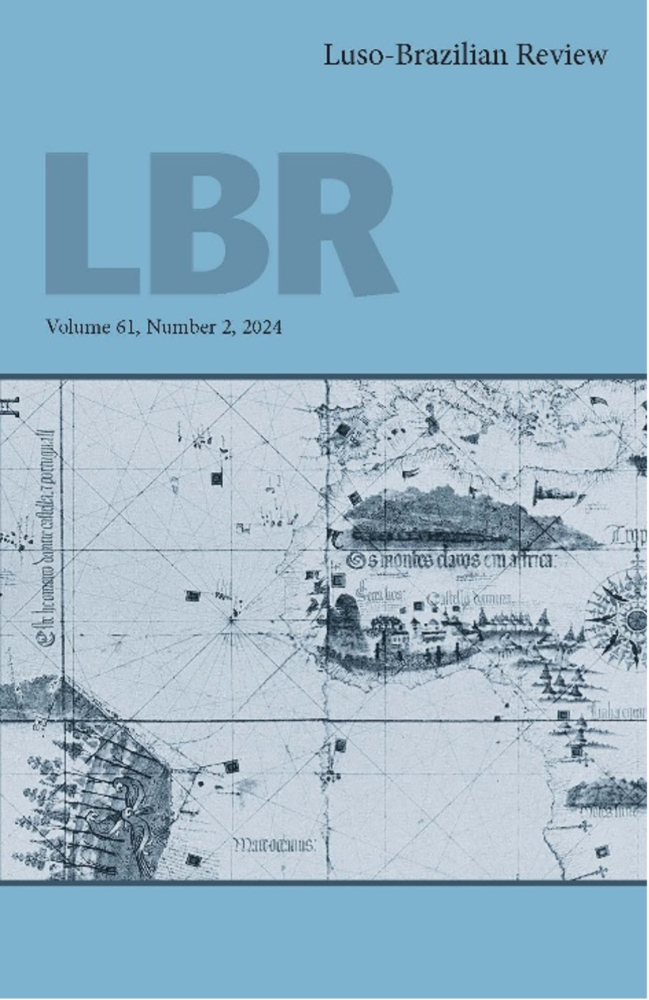
Number 2 of Volume 61 of the LBR (University of Wisconsin Press, 2024) published a dossier of articles dedicated to Fernando Pessoa's unpublished tragedy.
The dossier is the result of the communications presented at the international conference, The Duke in Parma, which took place in Parma on 17 March 2023. The study of this play raised a number of preliminary issues, which were discussed at the event.
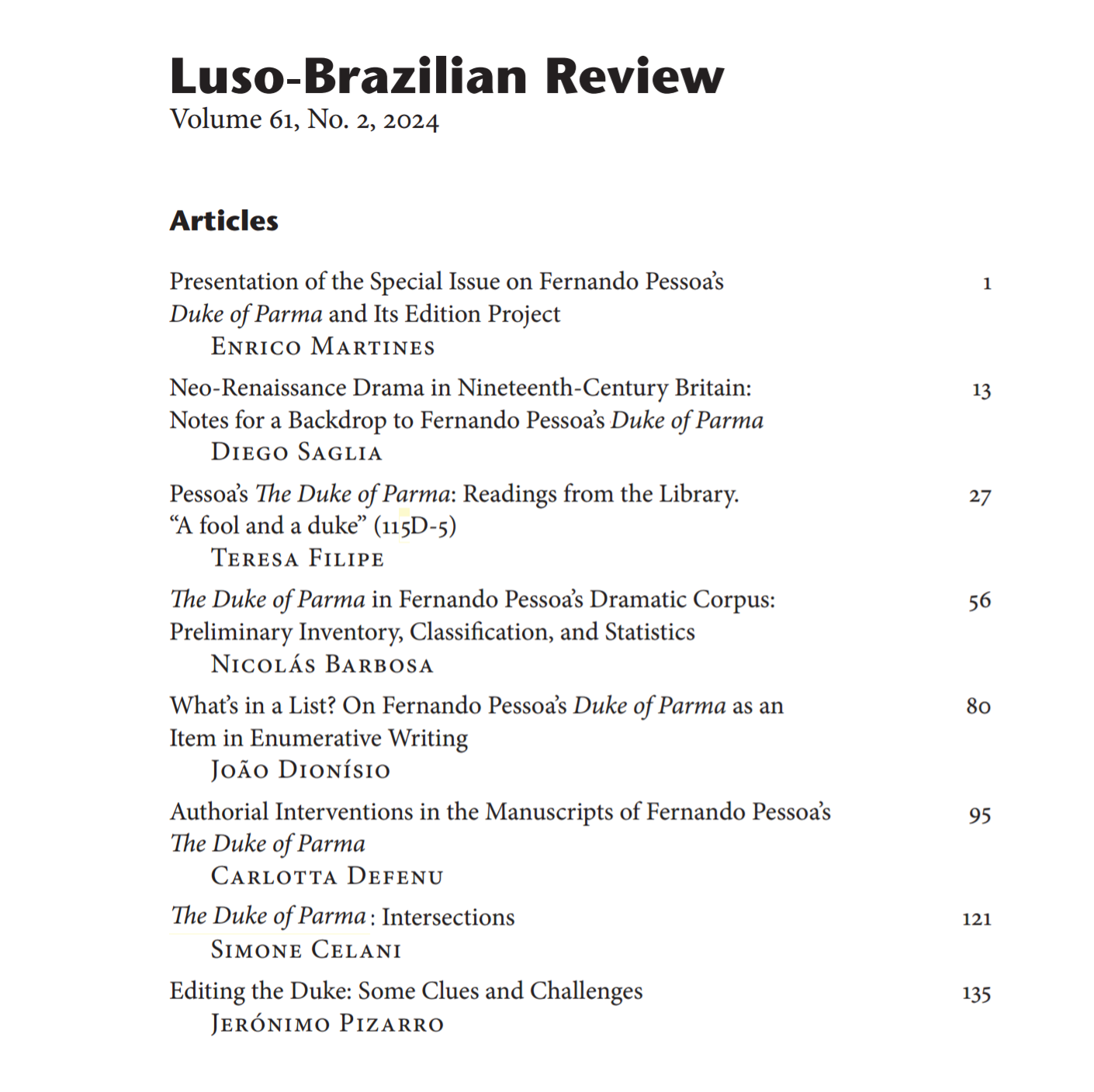
Following the presentation of the dossier and the research project edited by Enrico Martines, the special issue of the journal includes seven articles. Diego Saglia examines the connections between Pessoa's Shakespearean tragedy and the neo-Renaissance trend that dominated 19th-century English literature. Teresa Filipe identifies the English and Italian literature available in Pessoa’s personal library to determine possible sources of inspiration for The Duke of Parma. Nicolás Barbosa focuses on Fernando Pessoa’s theatrical production, assessing the position of this play within the author’s dramatic corpus. João Dionísio analyses lists that include the title of The Duke of Parma, profiling this text in relation to its chronology and providing context alongside Pessoa’s other works included in similar lists. Carlotta Defenu provides an overview of the material characteristics and authorial interventions revealed by the documents in the 'Duke of Parma' file. Simone Celani reflects on the non-linear nature of Pessoa’s writing and the need to use philological tools and editorial methodologies that do not necessarily follow expected paths. Finally, Jerónimo Pizarro contributes to the ongoing philological debate by addressing some editorial issues raised by Pessoa’s English dramatic works.
 |
